


Join 30,000 Makers
Get 10% off your first order
Be first to see new arrivals and limited fabrics before they sell out.
No spam. Just beautiful fabrics.

Cotton voile and muslin are both lightweight, open-weave cotton fabrics - breathable, soft against the skin, and suited to projects where a fine, airy cloth is needed. While related, they have different qualities and uses.
Cotton voile is a fine, semi-sheer fabric with a higher thread count than muslin, giving it a smooth, slightly silky handle. It's used for blouses, dresses and lingerie where a lightweight, flowing cloth is needed, and works well as a lining beneath embroidered or sheer fabrics. It's also popular for lightweight curtains and window dressing.
Muslin has a looser, more open weave and a softer, more flexible hand. It's widely used for babywear, swaddle blankets and children's clothing, as well as for crafting, food preparation, and as a toile or test fabric for dressmaking patterns before cutting into your main cloth.

 Voile - White
Lightweight white cotton voile fabric, 145cm wide with soft flowing handle.
Soft white Egyptian cotton muslin fabric, 150cm wide with lightweight feel.

 Cotton Voile - Myra
Soft cotton voile in deep navy with floral paisley print, light, breathable and ideal for summer wear.
 Voile - Ivory
145cm wide, lightweight semi-sheer cotton voile fabric in ivory. Great for dressmaking or curtains.
135cm abstract patchwork cotton voile, 100% cotton, lightweight 75gsm fabric for dresses.

 Cotton Voile - Diya
145cm cotton voile in deep navy with floral paisley print, light, breathable and ideal for summer wear.
 BA - Rosette - Coral
Coral geometric broderie anglaise, 137cm wide. Woven cotton-mix yarn. Airy, modern embroidered fabric.
Shop Now
140cm wide, cotton voile broderie anglaise fabric in ivory, with a series of embroidered dots.

 Linen Look - Voile
Fabulous 150cm wide black polyester viscose voile. Soft and textured, it resists creasing, perfect for stylish hot weather garments.
White fire retardant cotton muslin fabric, 158cm wide with soft lightweight feel.

 Cotton Voile - Meera
Floaty cotton voile with bold geometric star print, breathable, lightweight and easy to wear.

 Cotton Voile - Kiara
Unique cotton voile with geometric floral print, lightweight, breathable and ideal for summer wear.
135cm yellow floral cotton voile, 100% cotton, lightweight 75gsm fabric for dresses and blouses.
Pure Red 100% Cotton Voile. 150cm width. Ultra-lightweight woven cloth for shirts and soft linings.

 Qjutie - Bambino Print - Lemons
Lemon Print Cotton Muslin. 140cm wide. Lightweight 130gsm off-white fabric for airy babywear.

 Qjutie - Bambino Print - Carrots
Carrot Print Cotton Muslin. 140cm wide. 130gsm breathable off-white fabric for baby jumpsuits.

 Printed Voile - Lotus - Neon
Floral voile fabric, 150cm wide, with a multicoloured print on a black background.
A rather fabulous lightweight poly viscose voile in rose pink.
Cotton voile fabric, 146cm wide, with a colourful winter fruits print on dark ground.
Food grade Egyptian cotton muslin fabric, 156cm wide in soft white cotton.
Lightweight cotton voile with soft handle and patchwork print, ideal for floaty summer clothing.

 Embroidered Cotton Muslin - Florals
142cm white embroidered muslin, 100% cotton, lightweight 125gsm fabric for blouses and dresses.

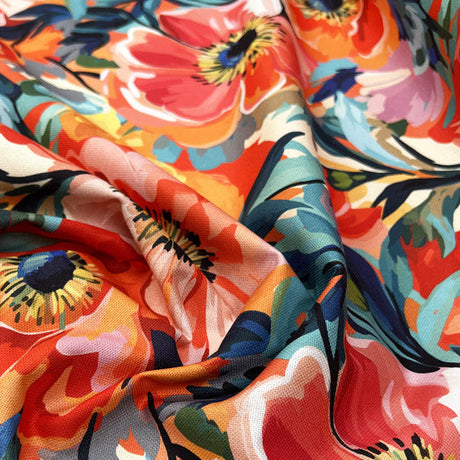
 Painterly Cotton - Pink Floral
140cm cotton voile in cream with pink floral print. Ultra lightweight, soft and airy at 60gsm.
Black Raised Spot Dobby Cotton. 150cm wide. 100% Washed Cotton. 73gsm. Feather-light & breathable.
Soft pink 150cm dotty dobby. 73gsm lightweight washed cotton. Subtle woven texture. Gentle drape.
 BA - Payton
127cm wide white broderie anglaise. 100% cotton voile yarn. Woven fabric with daisy openwork.

 Dobby Voile - Red
143cm wide, 100% cotton voile fabric in red with a delightful geometric dobby weave design.

 Dobby Voile - Orange
143cm wide, 100% cotton voile fabric in orange with a delightful geometric dobby weave design.
137cm wide, cotton polyester broderie anglaise fabric in denim with a unique geometric pattern.
 BA - Libby
Ivory floral broderie anglaise, 140cm wide. 100% cotton woven yarn. Delicate, airy fabric.
Printed voile fabric, 156cm wide, with a colourful abstract psychedelic design in red tones.
 Egyptian Muslin - Ivory

 French Voile - Black
147cm wide, black 100% cotton voile fabric.
Get 10% off your first order
Be first to see new arrivals and limited fabrics before they sell out.
No spam. Just beautiful fabrics.


