


Join 30,000 Makers
Get 10% off your first order
Be first to see new arrivals and limited fabrics before they sell out.
No spam. Just beautiful fabrics.

Our batik and tie dye collection is full of colour, from genuine wax-resist batik cottons and premium Hoffman Bali prints to lighter batik-look voiles and viscose blends. Most pieces are 100% cotton, with weights suited to both dressmaking and quilting.
Whether you're making a vibrant dress, a patchwork quilt or a craft project, there's a print here to suit. Order a sample if you'd like to check the colour and weight first.

 Batik - Burnt Medallion
110cm batik cotton with pink and red tones. Lightweight, breathable and easy to sew.

 Linen Mix - Batik Tie Dye - Pink
Washed pink tie dye fabric with natural texture, viscose linen blend, 137cm wide, 269gsm

 Batik - Driftwood
110cm batik cotton in olive and brown tones with geometric bands. Lightweight and breathable.

 Cotton Voile - Diya
145cm cotton voile in deep navy with floral paisley print, light, breathable and ideal for summer wear.

 Hoffman Bali Cotton Lawn - Winifred
112cm wide cotton lawn. Rainbow hand-painted leaves on black. A unique, artisan Hoffman masterpiece.

 Batik - Coral Drift
Abstract batik cotton in blue and green, 110cm wide. Lightweight, smooth and breathable.

 Hoffman Bali Cotton Lawn - Jelly
112cm wide hand-painted Hoffman cotton lawn. Plum and berry leaf fabric. Woven cotton yarn.
Shop Now

 Batik - Lagoon
110cm blue batik cotton with fluid pattern. Lightweight, breathable and smooth to handle.

 Cotton Voile - Myra
Soft cotton voile in deep navy with floral paisley print, light, breathable and ideal for summer wear.
This digitally printed viscose dress fabric featuring a tie-dye design in orange, black, yellow and blue. A glorious, lightweight fire-like fabric!

 Batik - Blue Blossoms
Teardrop batik cotton in blue and white, 110cm wide. Light, airy and smooth fabric.

 Batik - Floral Vines
110cm black and cream batik cotton with floral design. Lightweight, breathable and smooth.

 Batik - Pink Fireworks
110cm batik cotton in pink, red and orange tones. Lightweight, breathable with a smooth finish.

 Batik - Undergrowth
110cm batik cotton in brown, blue and white tones. Lightweight, breathable with smooth feel.

 Cotton Voile - Kiara
Unique cotton voile with geometric floral print, lightweight, breathable and ideal for summer wear.

 Cotton Voile - Meera
Floaty cotton voile with bold geometric star print, breathable, lightweight and easy to wear.

 Linen Mix - Batik Tie Dye - Brown
Linen viscose blend with brown tie dye print, textured with weight for structured garments.

 Batik - Floral Silhouette
110cm black batik cotton with white floral motifs. Lightweight, breathable and smooth feel.

 Fiona - Volcano
Our pleated, 100% polyester dress fabric with a digitally printed tie-dye effect is ideal for loose palazzo pants.

 Fiona - Rhubarb
Our 100% polyester dress fabric features a digitally printed tie-dye effect and pleated texture, ideal for loose pants.
5 batik fabrics fat quarter pack in rich reds, blues, greens, yellows, pinks & oranges. Each 100% cotton piece measures 50cm x 55cm. Made in India.
 Batik - Fiesta Flora
Colourful batik cotton poplin, 141cm wide, soft woven fabric with a vibrant floral design.
A tie-dye design, digitally printed viscose dress fabric in green, blue, black and brown. A glorious, lightweight fabric, perfect for summer!

 Summerfest - Pink
Our viscose marocain fabric is breathable & lightweight in a pink V-shape tie-dye digital print, ideal for summer wear.

 Summerfest - Green
100% viscose marocain fabric featuring a digital V-shape tie-dye print in a blue/green hue. Ideal for palazzo pants.

 Hoffman Bali Cotton Lawn - Brownie
112cm layered leaf cotton lawn fabric by Hoffman Fabrics for quilting and dressmaking.

 Hoffman Bali Cotton Lawn - Nutmeg
112cm bronze floral cotton lawn fabric by Hoffman Fabrics with black background detail.

 Hoffman Bali Cotton Lawn - Hummingbird - Multi
112cm wide hand-painted Hoffman cotton lawn. Teal & violet floral fabric. Light woven yarn.

 Hoffman Bali Cotton Lawn - Hummingbird - White
Hand-painted 112cm Hoffman cotton lawn. Fine woven yarn in bold navy & teal. Statement fabric.

 Hoffman Bali Cotton Lawn - Blue Dot
112cm wide hand-painted Hoffman cotton lawn. Indigo & sky-blue spot fabric. Light woven yarn.

 Hoffman Bali Cotton Lawn - Iceberg
Mint and white Hoffman cotton lawn. 112cm wide woven botanical yarn. A light, hand-painted fabric.

 Hoffman Bali Cotton Lawn - Merlot
Hand-painted Hoffman cotton lawn, 112cm wide. Sketchy icy floral fabric. Woven cotton yarn.

 Hoffman Bali Cotton Lawn - Spectrum
112cm wide hand-painted Hoffman cotton lawn. Rainbow floral fabric. Fine woven black cotton yarn.

 Hoffman Bali Cotton Lawn - Julie
Beautiful 112cm wide hand-painted Hoffman cotton lawn. Cobalt & indigo leafy fabric. Fine woven cotton yarn.
 Batik - Pink C
Indian cotton batik 114cm wide . Pink leaf pattern on watercolour fabric. Woven poplin yarn.
 Batik - Pink H
Pink Indian batik fabric 115cm wide. Petite floral cotton yarn. Woven poplin for summer sewing.
 Batik - Multi C
Black and rainbow Indian batik, 115cm wide. Hand-dyed cotton yarn. Vibrant floral vine fabric.

 Viscose Poplin - Canyon
This 144cm wide, digitally printed viscose poplin fabric features a mesmerising tie dye design.
150cm wide, viscose polyamide blend dress fabric featuring an ombre print made up of blue, yellow & green hues.
Lightweight cotton voile with soft handle and patchwork print, ideal for floaty summer clothing.
Orange purple batik cotton poplin, 141cm wide, bold patterned fabric with a smooth finish.
112cm blue floral batik cotton lawn fabric by Hoffman Fabrics for quilting and clothing.
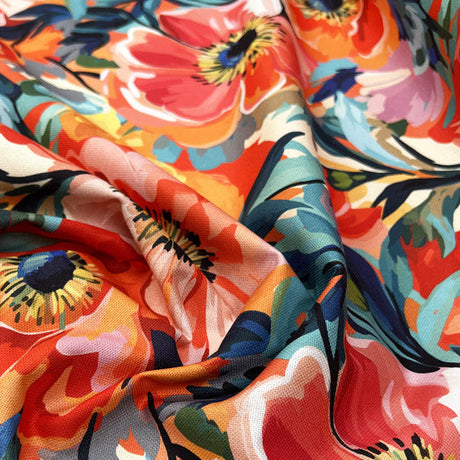
112cm floral cotton lawn fabric by Hoffman Fabrics in coral, pink and golden tones.
112cm wide hand-painted Hoffman cotton lawn. Vivid red striped fabric. Fine woven cotton yarn.
Hand-painted Hoffman cotton lawn, 112cm wide. Woodland leaf print fabric. Fine woven yarn.
Hand-painted 112cm wide Hoffman cotton lawn. Woven yarn in a pink dappled fabric. Fine finish.
Vibrant 112cm wide cotton lawn from Hoffman, with a dreamy floral wash in petal pinks, lilacs, and peach.
Get 10% off your first order
Be first to see new arrivals and limited fabrics before they sell out.
No spam. Just beautiful fabrics.


